
Zero client-side JavaScript
Misconception: A site with theme switching, page transitions, and responsive images is running a framework bundle.
No hydrated component, no external script, no bundle.
The only executable client code is the pre-paint theme boot in src/layouts/Base.astro and the toggle in src/components/ThemeSwitch.astro. A third inline block is declarative type="speculationrules" JSON, parsed as data rather than run.
The exact UTF-8 byte sizes of all three inline bodies are recorded here from the built output: the pre-paint boot is 195 bytes, the theme switch is 1267 bytes, and the speculation rules body is 89 bytes.
Everything else - the theme toggle, responsive Picture output, cross-document view transitions - is HTML and CSS.
Zero layout shift
Misconception: Custom web fonts always cost a flash of fallback text or a visible reflow.
global.css declares an Inter Fallback face metric-matched to Inter: ascent-override: 90%, descent-override: 22.43%, line-gap-override: 0%, size-adjust: 107.4%.
Fallback and final font occupy the same space during the swap, down to where the lines break, so the swap moves nothing and CLS stays at 0.000 rather than merely feeling stable.
One request to first paint
Misconception: Sites feel this fast because of a CDN, caching, and a service worker.
build.inlineStylesheets: 'always' puts every byte of CSS inside the document, so there is no render-blocking stylesheet fetch before the browser can paint.
The font preload and the optimised portrait are ordinary hints. The prefetch speculation rule only fires once a visitor hovers a same-origin link, so it never contributes to the first-paint measurement.
Enforced, not claimed
The interesting part is not the numbers. It is that the build refuses to ship when they stop being true.
The host sends a default-src 'none' policy where the only executable scripts are three SHA-256 hashes:
default-src 'none'; connect-src 'self'; script-src 'sha256-FzYV65K3v7bE7vrjFw+hgSsUVHwNk4F9UUy+L3bPVnQ=' 'sha256-l6TIiISDUQaHYtCj8kZwEAsrve068cnMyzNucFrQOt8=' 'sha256-OGzK6U4An6xAiEgFeb7wUMf8VfUm6Cz8x3x5dDof3+k='; style-src 'unsafe-inline'; img-src 'self'; font-src 'self'; base-uri 'none'; form-action 'none'; frame-ancestors 'none'
Hand-maintaining three hashes is a trap, so scripts/verify-csp.mjs walks every built HTML file, hashes each inline body, and fails the build when the set drifts from the directive. HSTS runs a year with preload, and the domain is on the browser preload lists.
The same script checks this page against the build: the directive quoted above and the three byte counts are compared to what actually shipped, so the case study cannot silently diverge from the artefact it describes.
The content collection is held to the same standard. Every project’s hook IDs must resolve to real heading anchors and every misconception string must appear verbatim in the prose, or the build throws - which is why the claims on a case study and the case study itself cannot drift apart.
The result
Four Lighthouse categories at 100, zero layout shift, WCAG AA+ contrast in both themes, and a single semantic main landmark with a working skip link and visible focus throughout.
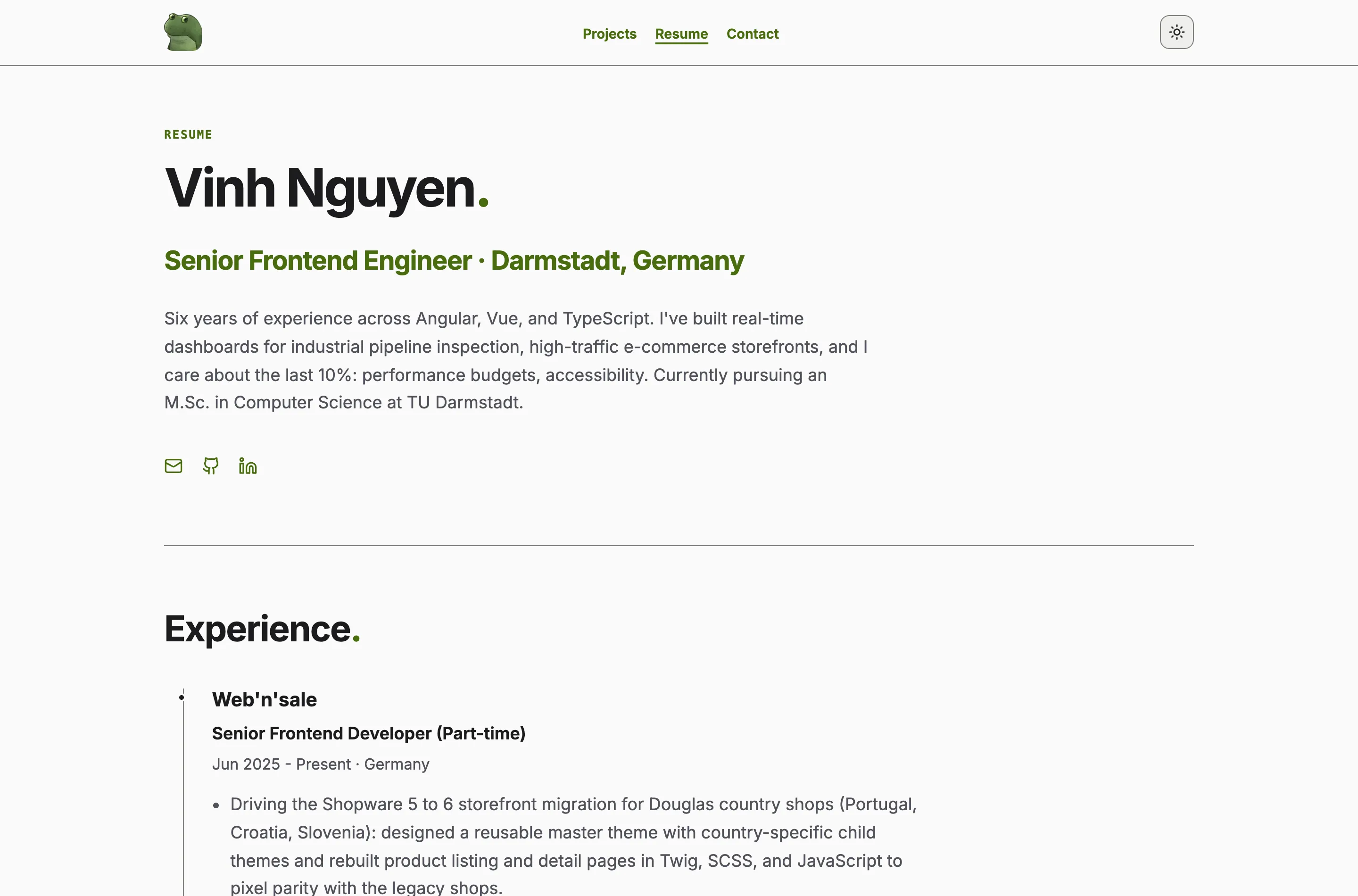
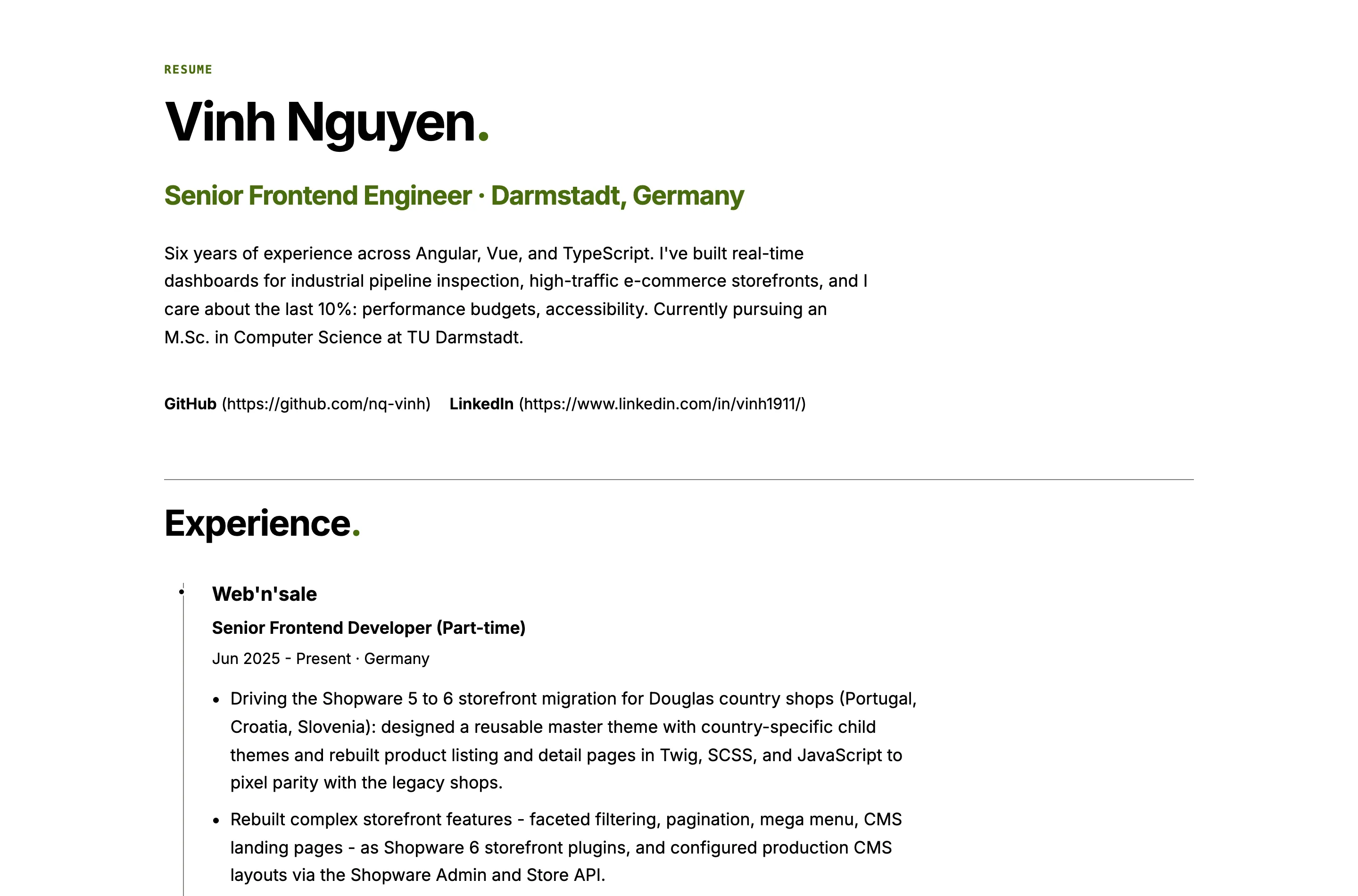
The stylesheet carries explicit prefers-contrast: more, forced-colors: active, prefers-reduced-motion and print paths, so the card grid, galleries and stat strip stay usable under all of them - and the print path is what turns the resume page into a clean PDF.